
September is National Honey Month, and Branch 24 members Fran Strekal and her sister, Rose Ivanec, have certainly been busy bees over the past year! Together, they launched their own beekeeping business, tending hives and harvesting golden honey. What began as a shared interest quickly grew into a small business, offering pure honey and a variety of honey-based products that showcase both their hard work and passion for nature’s sweetest gift. Fran writes our FRANtastic Cuisine column where she loves to feature traditional Slovak recipes. This month, she shares her recipe for Medovníky, made with honey. If you are interested in more information, please email meant2beeapiary@gmail.com.
 Busy Bees, Sweet Rewards
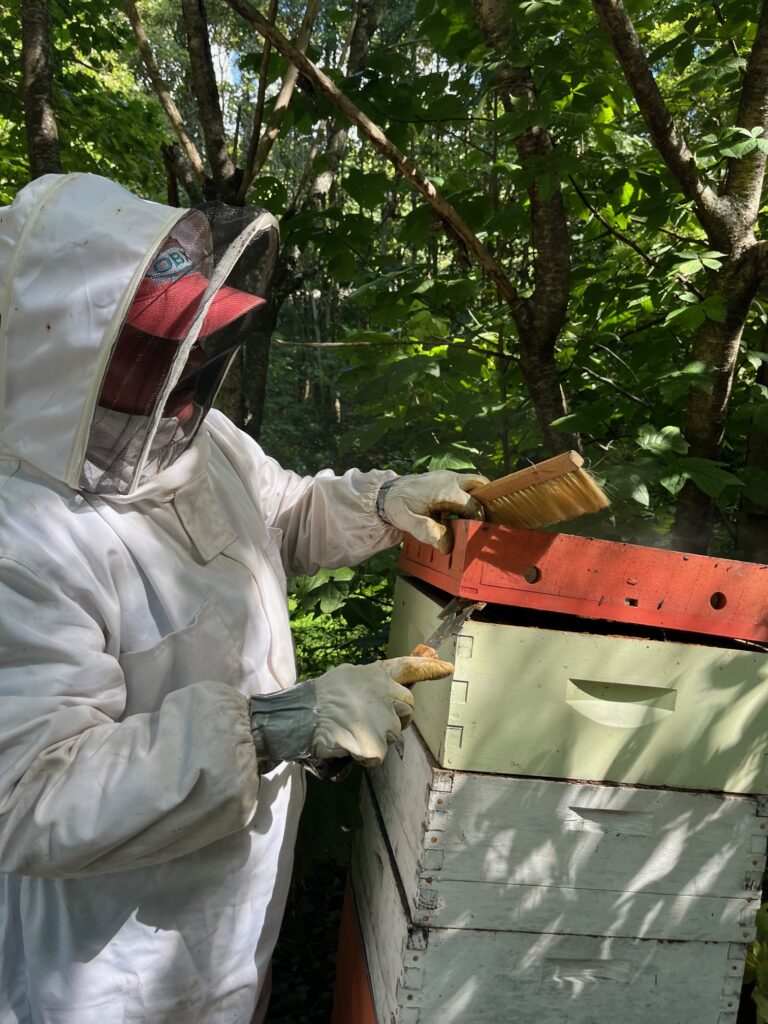
Honey has become an important part of daily life for sisters and Branch 24 members Fran Strekal and Rose Ivanec and who are beekeepers and co-founders of Meant To Bee Apiary. Their homesteading business, located on family land affectionately called “The Compound,” was first inspired by their matriarch, Terri Ivanec. With Rose already raising a few dozen chickens, Terri suggested adding bees to the mix. Soon, hives were buzzing, honey was being harvested, and Meant To Bee Apiary was born.
Today, the sisters maintain three healthy hives with plans to double that number next spring. Using 100% raw honey and beeswax, they craft honey, lip balm, body butters, sugar scrubs, lotion bars, and beard balms. If honey is not your jam, they also make homemade vanilla extract, sunscreen, laundry detergent, and hand sanitizer. Their signature blueberry jam is made with berries from bushes planted by their grandfather nearly 50 years ago and recently won third place at the Geauga County Fair! With each market they attend throughout the year, the sisters share not just their products, but their passion for homesteading and the joy it brings to their family.
When people ask them about their bees, they start by explaining just how busy and complex a hive really is. An average hive can hold anywhere from 20,000 to 80,000 bees, depending on the time of year, the health of the colony, and how much food and water are available. Inside, there are three castes of honey bees, each with its own role.
The Queen is the star of the show—she’s the only fertile female, and her entire job is to lay eggs, thousands of them in her lifetime. Then there are the Worker bees, the ones who really run the place. They’re sterile females, and they do it all: foraging for nectar and pollen, building the wax comb, capping the honey when it’s ready for long-term storage, tending to the Queen, feeding the young, and keeping the hive in order. And then, of course, there are the Drones, the males. Their single purpose is to mate with the Queen. Once summer ends, they’re kicked out of the hive and don’t survive the winter.
Each bee’s life is tied to its role. Worker bees live only four to six weeks in the summer, but they can stretch it to four months during winter. Drones usually last about eight weeks, while a Queen can live one to two years.
In their managed hives, Rose and Fran give the bees structure by placing wooden or plastic frames inside their boxes. The bottom box, called the brood box, is like their nursery. That’s where the Queen lays her eggs, the brood are raised, and food is stored for the colony. On top of that, they stack smaller honey supers. Those are the boxes where the bees store their excess honey.
Harvest time is one of their favorite parts of beekeeping. They carefully pull the frames, uncap the wax cells, and place them in a spinner to extract the honey. After filtering it, they bottle it themselves. “Holding those jars, filled with golden honey straight from our own bees, always feels like the sweetest reward of all,” said Fran.
Our Pollinator Friends
Beekeeping season runs from spring through early fall, with the busiest days and sweetest rewards in the summer. Winter is a time of survival for the hive—their bees need 70 to 90 pounds of honey to make it through the cold in northern climates. By early spring, their pantry is nearly empty, and the first blossoms—often dandelions—are absolutely vital to their survival. Rose stated, “We’ve learned to see those little yellow flowers differently. To us, they’re not weeds but lifelines for the bees.”
Honey itself is remarkable. Beyond its sweetness, it has antimicrobial properties that help protect against bacteria, viruses, and fungi. Every jar feels like a gift from nature—nourishing, healing, and timeless. They also remind friends and neighbors that there are simple ways to help pollinators thrive: plant native, bee-friendly flowers, set out a shallow dish of water with pebbles so bees can land safely, avoid pesticides in the garden, and leave a quiet corner of the yard undisturbed for wild bees to nest. Even small efforts matter. Buying honey from local beekeepers, volunteering with bee conservation groups, or simply sharing the story of how important pollinators are can all make a difference.
A Symbol of Our Faith
Caring for bees has also deepened their connection to their Catholic faith. The Bible often uses honey as a symbol of blessing and abundance—the Promised Land was described as “flowing with milk and honey,” and John the Baptist was sustained by wild honey in the wilderness. Among the saints, St. Ambrose is honored as a patron of bees and beekeepers. Legend says that as a child, bees swarmed around him but left him unharmed, with only a drop of honey on his cheek—a sign of the “honeyed tongue” he would one day use to spread God’s word. St. Abigail, another beloved figure, was a beekeeper and healer who used honey in her remedies and, according to tradition, once defended her church from robbers with a swarm of bees.
The Church’s connection to bees is both practical and spiritual. Beeswax candles, especially the Paschal candle at Easter, have been part of Mass for centuries. And at Christmas, Slovak families still drizzle honey on oplatky during Vilija, a beautiful reminder of God’s grace and the sweetness of life.
Our Honeyed Heritage
This bond with bees runs deep in Slovak history as well. As early as the 5th century, honey was gathered from wild hives, and by the 12th century nearly every household cared for bees. Over the centuries, beekeeping grew from a simple family practice into an important part of agriculture, eventually leading to Slovakia’s first scientific beekeeping institute in Liptovský Hrádok. Today, Slovak honey is treasured around the world for its purity and flavor. At the open-air beekeeping museum in Kráľová pri Senci, visitors can still see historic hives, tools, and traditions come to life. Both sisters agree: “For us, knowing this history makes our own beekeeping feel even more meaningful. It’s a way of honoring our faith, heritage, and God’s buzzing creations.”