
Listen to the Global Slovakia Podcast where they explore the stories, traditions and spirit of Slovakia, the heart of Europe.
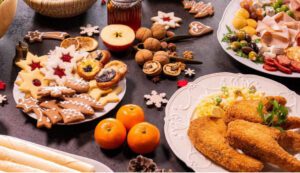 In this episode of Slovak Christmas series, we step into the warm glow of Štedrý Večer – Christmas Eve, a night shaped by ancient beliefs, quiet rituals and dishes that carried hopes for prosperity, health and unity. Before carp, before potato salad, even before Christianity, the Christmas Eve meal was a sacred ceremony, a feast of meaning, memory and magic. Long before fried carp became the star of the Slovak Christmas dinner, the festive meal followed a much older ritual. For the Pagan ancestors of Slovaks, Christmas Eve, winter solstice was a moment filled with prosperity magic. Every dish had meaning, every ingredient had a purpose. The menu varied from region to region, but certain themes were universal. And at the heart of it all was abundance.
Traditional Christmas Eve dinners once included 7 to 9 courses. These weren’t extravagant meals. Portions were small, ingredients simple, but each number held deep significance.
7 symbolized wisdom and good fortune. The ancient Slavs counted not 5 but 7 senses, adding intuition and clairvoyance. Even pregnancy was believed to last seven months. 9, the highest single digit, represented spiritual completion. The old Slavic year had nine months. The week had 9 days. Every number, every dish carried the hope of a blessed year. Everything harvested that year, grain, nuts, pulses, dried fruit, found its way onto the Christmas table. This was the community’s way of giving thanks for the gifts of nature. Even poor families participated. The dishes were humble, but the symbolism was profound.
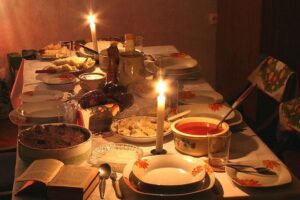 Advent also meant fasting, so Catholic families served a meat free menu. Protestants, however, did not fast, and meat appeared on their festive tables. At its core, the Christmas Eve meal was both a spiritual ritual and a celebration of life simplicity. Dinner often began with thin Christmas waffles, a tradition that evolved over time. These wafers symbolize the body of Christ, eaten only at Christmas and usually paired with honey and garlic.
Waffles were first baked in monasteries, then later by village teachers whose pupils distributed them throughout the community. A sweet echo of unity and shared blessing. Historical records from regions like Kisusi describe festive meals that begin with fruit Brandy, followed by waffles, garlic bread with honey, simple soups, sauerkraut with dried mushrooms, poppy seed, dumplings, porridge and fruit.
One dish appears across Slovakia under many names: Opekance, bobalki, pupáky – small bread rolls served with poppy seeds and honey. They symbolized prosperity. Families even used dough to brush trees, ensuring fertility in the next growing season. Eating from the same bowl reminded everyone that survival depended on unity. Family wasn’t symbolic, it was essential. Beans, peas and lentils, symbols of wealth and abundance, appeared everywhere in soups, stews and porridges. And then, of course, there was soup, a centerpiece of Central European cuisine, nourishing, comforting, healing. From mushroom soups to sauerkraut soups, sweet and sour lentil soups to hearty Eastern bean soups, the variety was astonishing. Soup was not a starter; it was life itself.
No Christmas meal was complete without sweet dumplings, šulance with poppy seeds or walnuts, and the ceremonial holiday cakes. In western Slovakia, the multi layered many fillings Štedrák symbolized abundance and spiritual richness. These weren’t everyday treats. Children waited all year to taste them.
Fish appeared on Slovak Christmas tables long before carp took over the spotlight. Christian symbolism made fish popular during fasting periods. Slovaks traditionally favored perch, eel and trout. Carp was more common in Czech lands, especially in regions with historic pond systems. The modern version of fried carp with potato salad, the one we know today, didn’t enter mainstream cuisine until the 20th century, first recorded by MD Redagova and spreading widely only after World War 2.
During communism, the Christmas carp became an icon and a source of endless stories. Because supply was unpredictable, families bought carp early. Alive, the fish lived in the bathtub for days, meaning no one could bathe until Christmas Eve. Children named their carps. Parents dreaded the moment the fish met its fate. Some cried over it. Others tried to outsource the job to in-laws. These stories surface at virtually every Christmas table, humorous, nostalgic reminders of a bygone era.
And today, Christmas markets across Slovakia still display barrels of live carp, continuing the tradition in a modern way. The Christmas Eve menu is more than a list of dishes. It is a story of ancestors, rituals, hardships and hope, of families gathering to honor nature, faith and each other.